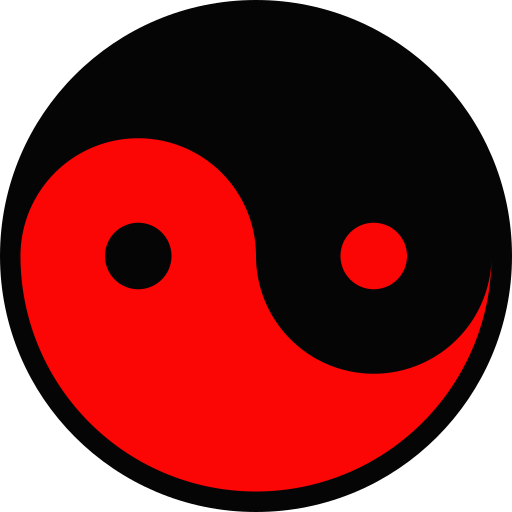
The Taoist foundation
The martial art of Fei Jing is based entirely on Taoist philosophy and the concept of the two primal forces - Yin and Yang. This concept finds its practical expression in every one of its movements. Unlike many other popular kung fu styles, Fei Jing has kept its techniques and its original form unchanged.
The inner energy "chi"
Like every internal art, Fei Jing focuses on cultivating the inner energy "chi" and using it in combat. This also leads to general physical strengthening, which serves the main goal - reaching spiritual and physical perfection.
- By learning many "tao" (forms), the student builds the principles of attack and defence into themselves.
- Breathing exercises and forms develop a specific way of breathing - the starting point for cultivating chi.
- The emphasis is on technique, not strength: the opponent is defeated by strikes to the vulnerable points of the body.
The name of the style
The fighter's movements are shaped by the opponent's attack. This is how the name "Soaring Eagle" works in practice: the eagle is the practitioner, and the wind - the air current on which it soars - is the opponent. However the wind changes, the eagle always adjusts to it and, using its force, masters it.
The eagle does not fight the wind - it uses it.
The eagle and the five Wudang animals
The image of the eagle should not be taken literally - the movements are not imitations, as in the external styles. They are based on the animal's character. The eagle itself is a combined image of the five Wudang animals, each of which corresponds to one of the five elements that make up the universe:
| Animal | Quality in movement |
|---|---|
| Tiger | power and determination |
| Crane | balance and precision |
| Dragon | flexibility and continuity |
| Monkey | agility and mobility |
| Snake | softness and reaching the vulnerable points |
The strategy and technique of Fei Jing are built on the principles of interaction between these five forces. The animals also appear in the breathing exercises and falls of the grading syllabus - "tiger breathing", "snake fall" and so on.
Weapons and competitions
An important part of practice is mastering different weapons - from the traditional Chinese staff, spear, sword and knife to the "eagle claws" that are specific to the style (more about the weapons). Because of the nature of the techniques, competitions are held only in forms, which show the student's technical level.
Yin and Yang in the body
When the body is tense, it is in a state of Yang; when it is relaxed, it is in a state of Yin. A firm stance when striking or blocking is Yang, while moving from one stance to another with a relaxed body is Yin. This makes movement fast and economical.
The striking hand is thrown out in a state of Yin. For a fraction of a second, at contact, it switches to full Yang and then returns to the relaxed state. This pulsing between the two states is the basis of Fei Jing and of all internal styles of kung fu. It develops great speed in attack and defence, and the fighter uses a minimum of physical force for a maximum result - this is the "external" within the "internal".
Continue reading: the taiji symbol and its meaning →